Caravelle Peninsula
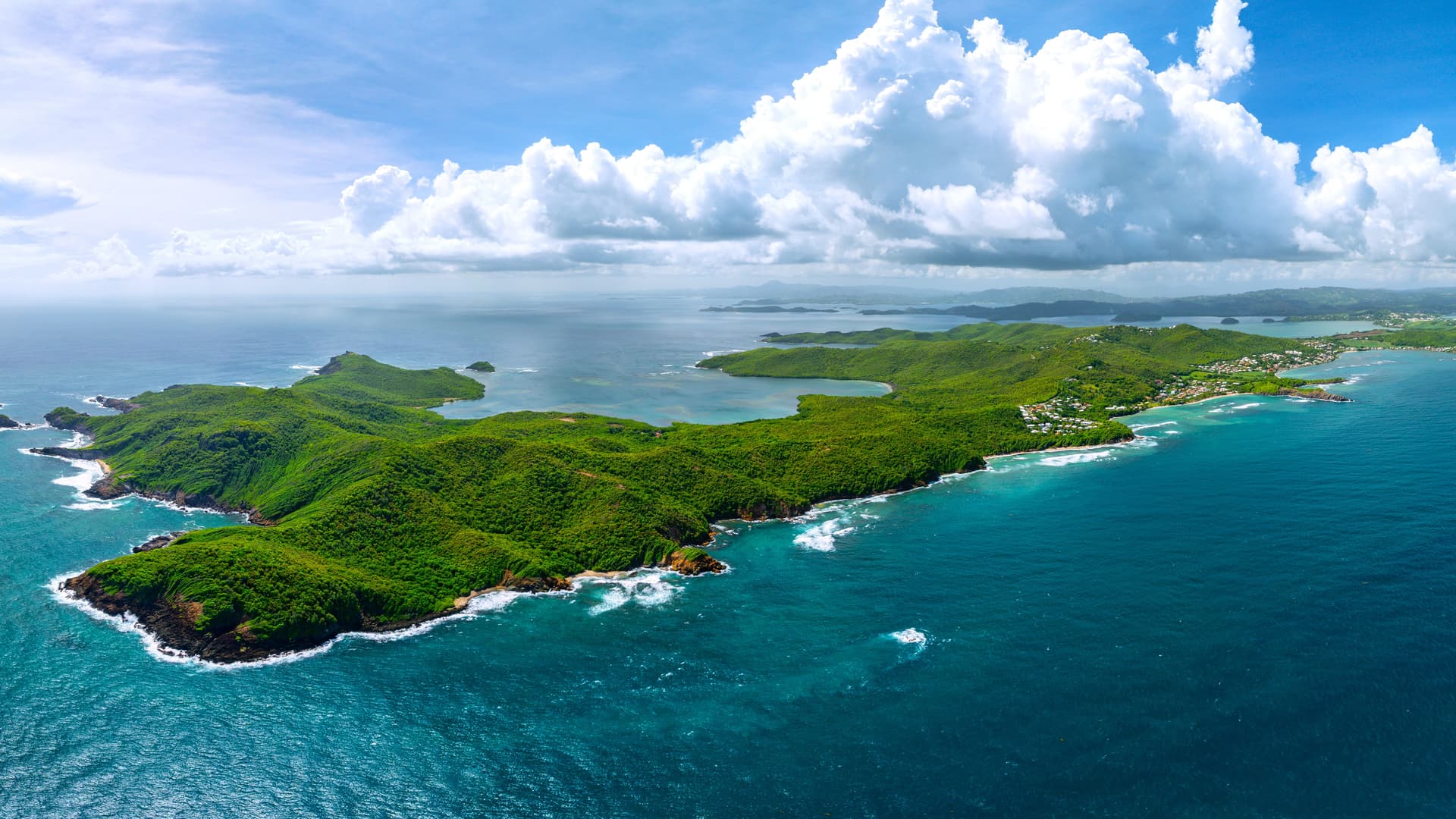
A dry, windswept tongue of land stretching 12 km east of Martinique, between a classified nature reserve, 18th-century sugar ruins and a fishing village.
The Caravelle Peninsula extends 12 km into the Atlantic, between La Trinité to the north and Galion to the south. Geologically, this strip of land is among the oldest formations in Martinique, predating Mount Pelée itself. The result is a landscape that stands apart from the rest of the island: no rainforest here, but a dry savanna swept by trade winds, where logwood, guaiac and spiny acacia thrive. Crossing the peninsula from west to east, you move in less than 8 km from a sheltered leeward coast to cliffs where the ocean crashes relentlessly.
The eastern half has been classified as a national nature reserve since 1976, protecting roughly 400 hectares. The marked trail that loops around it starts behind the ruins of Dubuc Castle, an 18th-century sugar estate whose family left an indelible mark on the peninsula's history through coastal trading and, according to local lore, wrecking. Plan on 3h30 for the full loop, 1h30 for the shorter version that leads only to the lighthouse. The Caravelle Lighthouse, perched 154 metres above sea level, has served as a navigational marker for ships since 1862 and offers an unobstructed view over Galion Bay and, on clear days, the neighbouring Robert Peninsula.
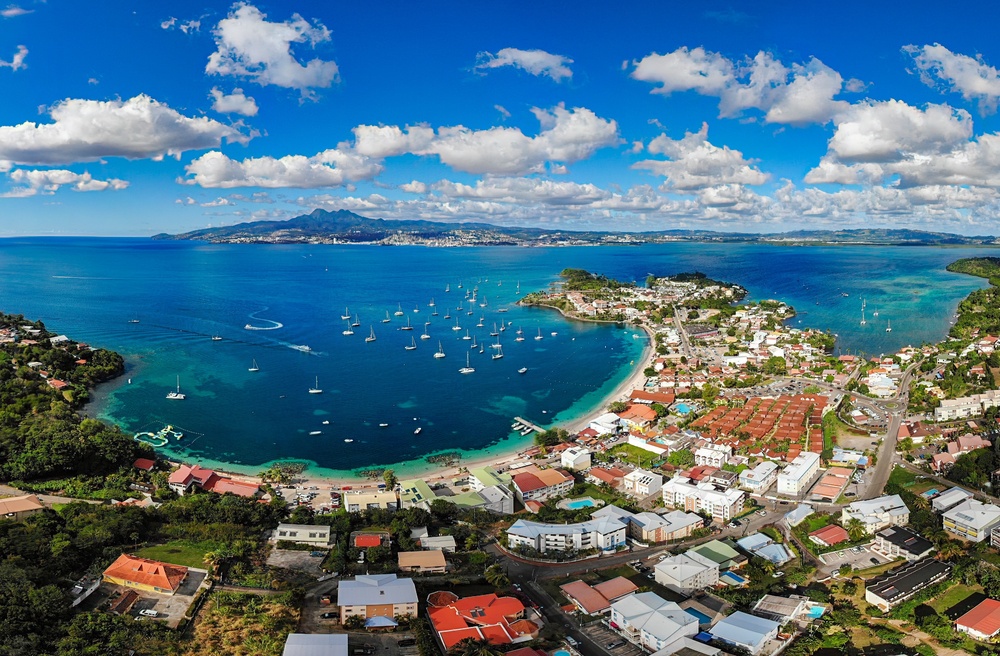
Tartane, the main settlement, has lived by fishing since time immemorial. Around 7am, the yoles return and unload kingfish, snapper and lobster directly onto the sand of Anse Bonneville. The modest fish market is a daily scene, devoid of any tourist staging. A few simple beachside tables serve fish court-bouillon, accras and dried salt cod fritters, typically between 15 and 25 euros for a main course. It's unpretentious fishermen's cooking, accompanied by a ti-punch prepared fresh before your eyes.
Wind is the other defining feature of the place. The peninsula faces the trade winds head-on, making it one of the island's best spots for kitesurfing and windsurfing. Anse Michel, at the north-eastern tip, concentrates the schools and experienced riders. Conditions are reliable from roughly December to June, with winds of 15 to 25 knots. For swimmers and families, Anse l'Étang and Tartane beach itself offer calmer waters, sheltered by a reef.
Beyond fishing and tourism, Caravelle remains agricultural territory. You still encounter a few cattle herds grazing freely on the savanna, pineapple plantations around Galion, and one of Martinique's last active sugar mills, the Galion factory, which also produces agricultural rum. It's a region where you slow down: little traffic, narrow roads lined with seaside grape trees, and a drier, sharper light than elsewhere on the island.
Must-see
Nature reserve trail. A 3h30 loop through dry savanna to the lighthouse and Atlantic cliffs, passing through the mangroves of Trésor Bay where herons and frigatebirds nest.
Dubuc Castle ruins. Remains of an 18th-century sugar estate with a small museum on site. The panorama over Galion Bay from the courtyard recalls the site's strategic role in colonial coastal trade.
Tartane fish market. Yoles return around 7am at Anse Bonneville, with kingfish and lobster sold on the sand. Nearby tables prepare fish court-bouillon on the spot.
Kitesurfing at Anse Michel. A wind-swept spot with 15 to 25 knots between December and June, with schools for beginners and open water for experienced riders.
Galion factory and distillery. Martinique's last active sugar mill, visible from the road heading to Tartane. It also produces molasses agricultural rum, a rarity within the local AOC.
When to go
The peninsula is one of Martinique's driest zones, which extends the visiting window compared to the rest of the island. The dry season, or carême, runs from December to May, with temperatures of 25 to 30°C and manageable humidity. It's also when the trade winds are most reliable, ideal for kitesurfing and hiking in the reserve, where trails remain passable without mud. From June to November, the wet season brings brief but sustained showers, especially in September and October, coinciding with peak Atlantic hurricane season.
For the Caravelle trail hike, starting before 9am is essential: the savanna offers virtually no shade and temperatures quickly climb above 30°C by midday. February to April are the most comfortable months, with steady winds that make the effort less taxing.
Practical tips
One to two nights on site suffice to cover the essentials: one day for the reserve trail and Dubuc Castle, half a day for Tartane and its beaches, plus a possible water activity. The peninsula sits roughly 45 minutes' drive from Fort-de-France and 30 minutes from Aimé Césaire Airport, making it a good entry or exit point. The D2 is the sole access road—narrow but well-maintained.
For route planning, Caravelle naturally connects with the North Atlantic coast for those continuing to Sainte-Marie, Le Lorrain and the wild coast, or with central Martinique and Fort-de-France for an urban transition. It pairs well with a circuit including the North Caribbean and Mount Pelée, offering striking landscape contrast. Hotel comfort remains modest in Tartane: small family-run hotels, guesthouses and rentals, with no major luxury infrastructure. The region suits hikers, wind-sport enthusiasts and travellers seeking a fishing-village atmosphere rather than a postcard beach.