North Atlantic
The agricultural and windswept face of Martinique, between the banana plantations of Basse-Pointe, the distillery of Sainte-Marie and cliffs battered by the ocean. A slow region, rarely crowded.
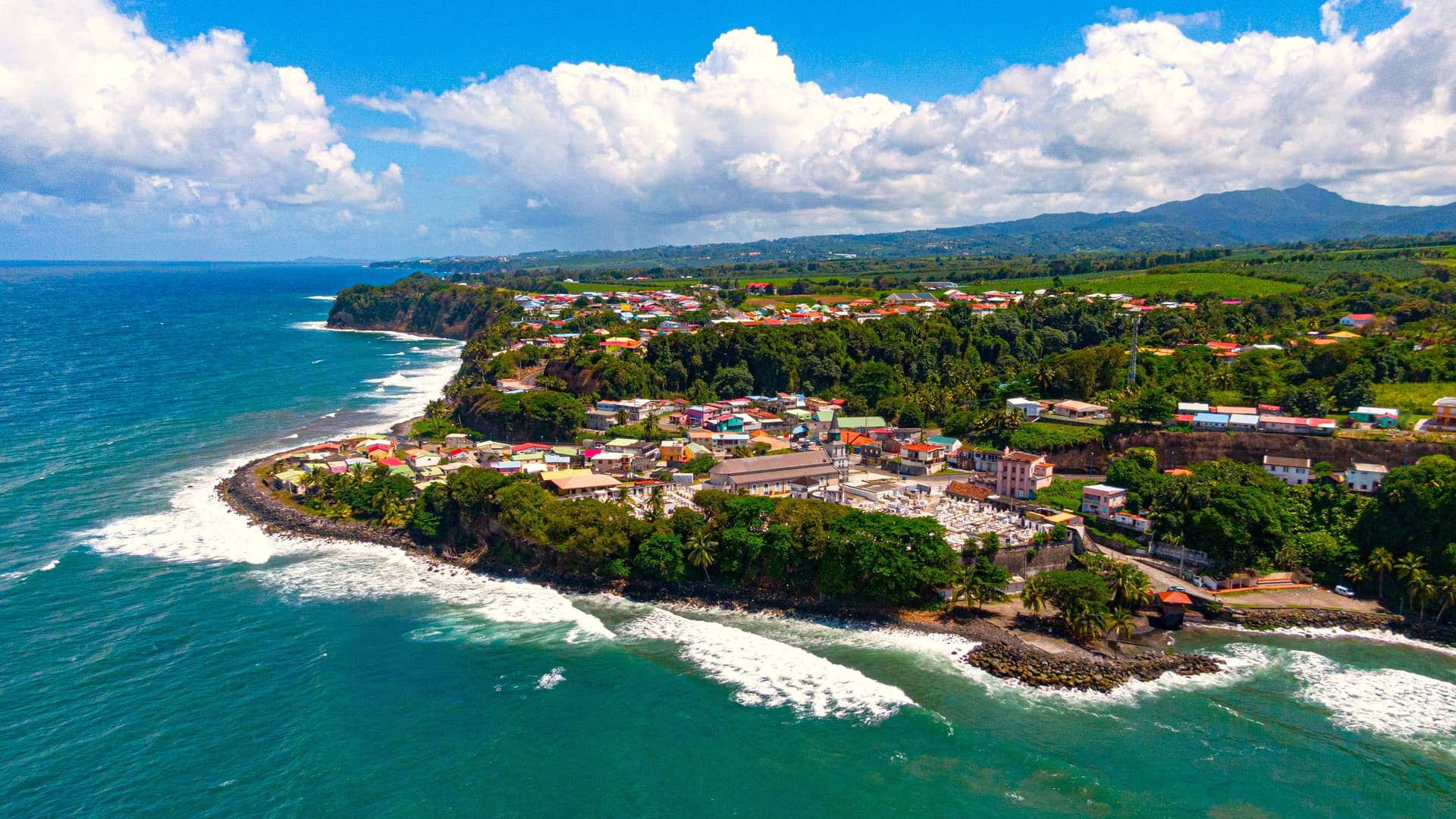
Martinique's North Atlantic stretches from Basse-Pointe to Sainte-Marie, along some fifty kilometers of east-facing coastline. Here the trade winds blow strongest, Atlantic swells crash against basalt cliffs, and banana plantations cover the slopes up to the foothills of Mount Pelée. The road connecting these towns, the N1, passes through Le Lorrain, Marigot, and Sainte-Marie, winding through green hills and cultivated fields. This is agricultural Martinique, the producer of export bananas and sugarcane destined for distilleries.
Our team sends travelers here who want to understand the island beyond the postcard beaches. Sainte-Marie concentrates much of the appeal: the Saint-James distillery, founded in 1882, houses the Rum Museum in a wooden Creole plantation house and offers a clear view of the AOC agricultural sector that defines Martinique rum's uniqueness. A few kilometers away, the Carib Tomb—a steep cliff overlooking the ocean—evokes the resistance of the last Kalinagos against French colonization in the 17th century. The site remains undeveloped; you reach it by a quiet trail, and that's precisely what makes it compelling.
The coast alternates between black sand coves of volcanic origin and rocky promontories. Anse Charpentier north of Sainte-Marie, Anse Bonneville on the commune of Trinité, and the islet Sainte-Marie—accessible on foot at low tide from February to April depending on tidal coefficients—define the shoreline. Inland, the plantations of Basse-Pointe and Macouba climb the northeast slopes of Mount Pelée, in conditions more humid than elsewhere on the island. It's also in this north that the finest pineapples grow and where a few sugarcane fields are still worked in traditional ways.
Culturally, the region carries strong memory. Aimé Césaire was born in Basse-Pointe in 1913, and the poet's birthhouse can be visited by appointment. Habitation Ceron, further west on the commune of Prêcheur, extends into the North Caribbean, but the network of sugar and banana plantations in the northeast—including Leyritz in Basse-Pointe—preserves traces of a plantation economy now regarded as heritage. Patron saint festivals in towns like Marigot and Le Lorrain mark the local calendar, with béla drums and dishes like matoutou de crabe, traditional at Easter.
Surfing attracts a small community here, especially around Anse Bonneville and Lorrain beach, where winter swells from November to March deliver decent waves for all levels. It's not Hawaii, but our team works with two local schools for travelers wanting to try a session. More broadly, the pace is slow in this region: few tour groups, limited buses, guesthouse meals in plantation houses rather than large hotels. It's terrain for travelers willing to walk a bit, eat at roadside lolos, and encounter more farmers than tourists.
The contrast with the southern beach resorts is stark. Here you don't come for postcard beaches—the water is often choppy, swimming requires care—but for dense vegetation, open vistas over the ocean, and a vision of rural Martinique that endures. Two to three days are enough to grasp its character; longer if you want to combine surf, hiking, and plantation visits.
Must-see
Saint-James Distillery and Rum Museum. Visit to the island's oldest active distillery in Sainte-Marie, with tastings of AOC agricultural rums and a historical exploration of the sector within a 19th-century wooden plantation house.
Carib Tomb. Basalt cliff overlooking the ocean, reached by a short trail from Prêcheur to the north, a place of memory for the last Kalinagos. Permanent wind, open views of the wild coastline.
Surf at Anse Bonneville. Light sand beach framed by sea grape trees, regular waves from October to April, beginner-friendly levels with instruction. Local vibe, two surf schools on-site.
Aimé Césaire's birthhouse in Basse-Pointe. Visit by reservation of the house where the poet and statesman was born in 1913, in an agricultural town that has remained apart from mass tourism.
Sainte-Marie Islet on foot. Crossing the sand tombolo that connects the islet to the mainland, passable at low tide from February to April depending on tidal coefficients. Views over the bay and seabirds.
When to go
The North Atlantic receives more rain than the rest of the island due to its easterly exposure to the trade winds. The dry season, or carême, from February to April remains the most comfortable window: daytime temperatures around 26 to 28°C, brief showers, sea still rough but skies often clear. This is also when the Sainte-Marie islet tombolo becomes passable on foot. The humid season, from June to November, brings rainfall that can exceed 300 mm per month on Mount Pelée's slopes, peaking in September-October. Roads remain open, but trails become slippery and views often obscured.
For surfing, the interesting period runs from October to April, when winter Atlantic swells reach the coasts. However, May and June offer a good compromise for hikers and plantation enthusiasts: less rain, fewer crowds, lush vegetation still thriving after year-end rains.
Practical tips
Plan two to three days to explore the region properly; longer if combining surf and plantation visits. Arrival is via Aimé Césaire Airport at Lamentin, about 45 minutes from Sainte-Marie by the N1. Car rental is essential: public transport exists but won't allow you to string together isolated sites. The road is winding but well-maintained.
The most logical combination pairs with the nearby Caravelle Peninsula to the south for its hiking trails and lighthouse, then the North Caribbean (Saint-Pierre, Le Carbet) via the Route de la Trace through the interior. For lodging, expect guesthouses in plantation houses, bed-and-breakfasts, and a few small family hotels rather than resorts. This is a region for contemplative travelers, hiking enthusiasts, families with curious teenagers, or couples seeking a slow pace. Less suited to those seeking primarily beaches and resort comfort, better served by the island's south.