Northern Caribbean
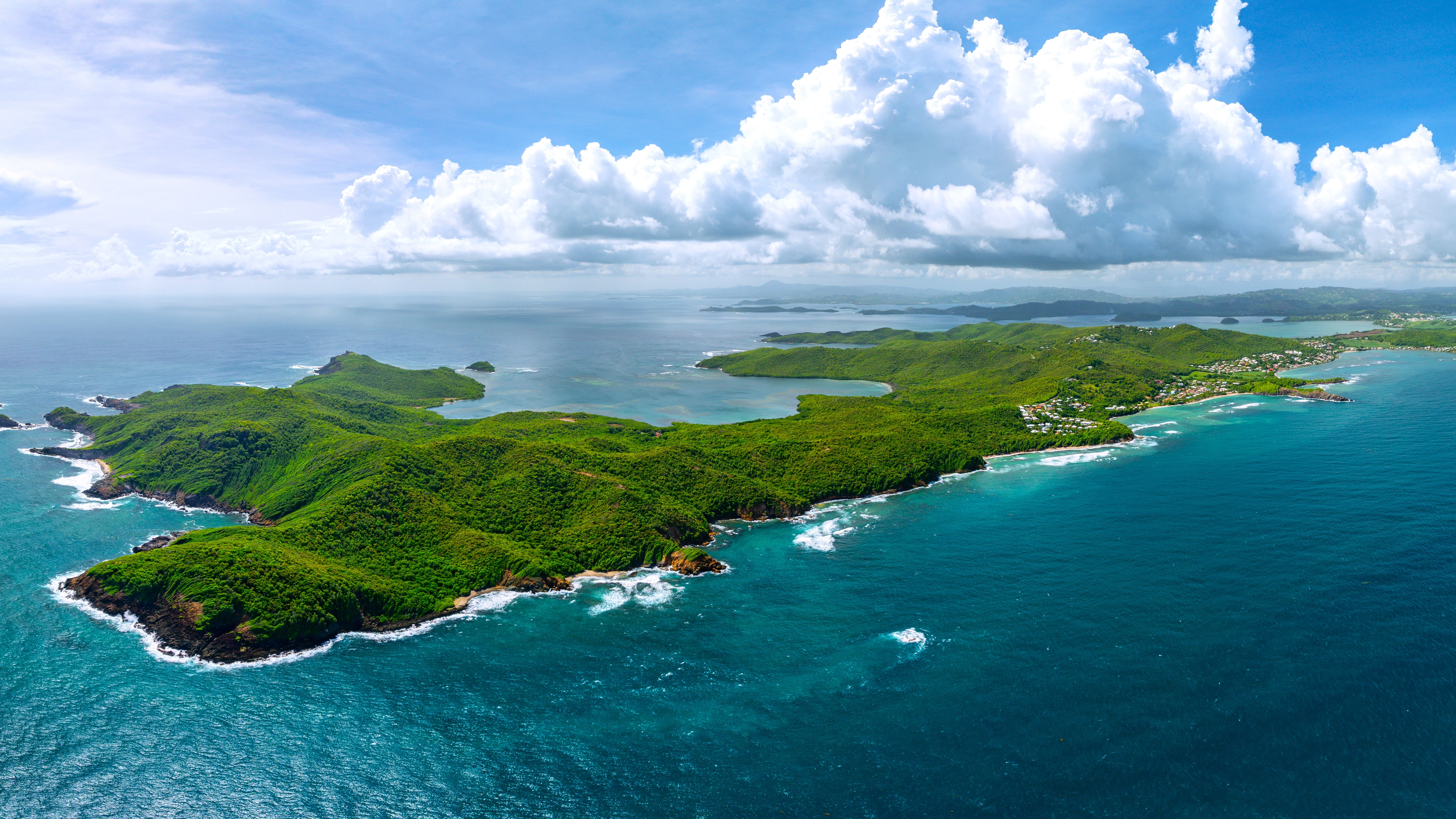
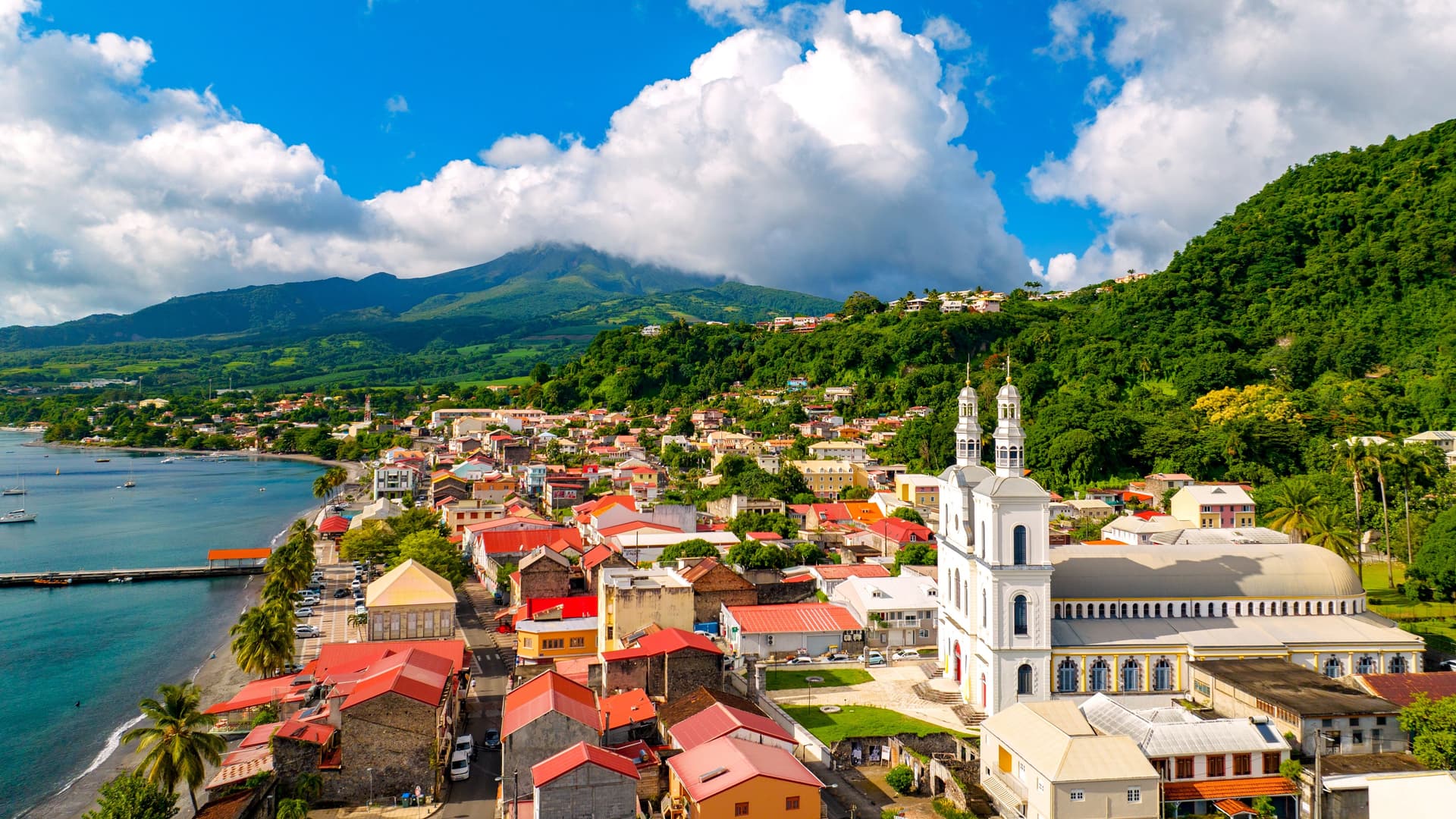
Martinique's leeward coast, stretching between the memory of Saint-Pierre, the slopes of Mount Pelée, agricultural rum distilleries and fishing villages of the north.
The Northern Caribbean coast stretches for about fifty kilometres between Schœlcher, just north of Fort-de-France, and Grand-Rivière, a fishing village nestled against the northern cliffs. It is the leeward side of the island, sheltered from the trade winds by the chain of peaks and Mount Pelée. The sand here is grey to black, a legacy of volcanic flows, the water often calm in the morning, and vegetation grows denser as you head north.
Saint-Pierre holds the region's collective memory. The eruption of 8 May 1902 erased in moments what was then Martinique's economic capital, claiming some 28,000 lives. Today you can explore the ruins of the theatre, Cyparis's dungeon, the old Mouillage quarter, and the Frank Perret museum preserves melted objects, twisted bells and photographs from before the catastrophe. The bay, ranked among the world's premier wreck diving sites, harbours around a dozen ships that sank that day, including the Roraima and Tamaya, accessible at depths between 20 and 50 metres.
South of Saint-Pierre, Le Carbet marks the landing attributed to Christopher Columbus in 1502 and the better-documented arrival of the first French colonists in 1635. Anse Turin, where Gauguin painted for five months in 1887, still houses a small museum cottage. This is also agricultural rum territory: the Neisson distillery, still family-owned, produces its 50° and 70° white rum from canes grown on the estate; Depaz, perched on the slopes of Mount Pelée, occupies the former plantation mansion rebuilt after 1902 and offers tours of the cellars and château.
Further north, the road narrows. Le Prêcheur, the last town before the point, lives from fishing and small-scale farming. Anse Céron beach, shaded by sea-grape trees, faces the Pearl Rock, a dive site known for its green sea turtles. Beyond this, the road ends at Grand-Rivière. To reach Anse Couleuvre, you must either walk three hours along the coastal trail through rainforest, or negotiate passage in a yole with a village fisherman—about 20 minutes by sea.
The cuisine reflects this dual identity, both coastal and agricultural. Crab matoutou is eaten at Easter, river crayfish (z'habitants) in roadside snacks around Morne-Rouge, grilled fish from the fisherwomen of Grand-Rivière, and everywhere ti-punch made with agricultural rum, cane sugar and lime. Local festivals, particularly Saint-Pierre's in August, enliven the towns with bèlè and drums.
The interior changes everything. Just kilometres from the coast, you enter the mornes: Morne-Rouge, at 450 metres, serves as the starting point for climbing Mount Pelée via l'Aileron (1,397 m at the summit, 4 to 5 hours return). The Gorges de la Falaise, at Ajoupa-Bouillon, can be descended via aquatic hiking between two narrow walls. This combination of volcanic coastline, dense history and accessible highlands justifies devoting several days to the Northern Caribbean coast rather than rushing through in a single day.
What to discover
Ruins and museum of Saint-Pierre. The theatre ruins, Cyparis's dungeon and the Frank Perret museum recount the 1902 eruption in two hours of visiting, before a dive on the bay's wrecks.
Neisson and Depaz distilleries. Two agricultural rum houses less than 10 km apart, one family-run in Le Carbet, the other set on Mount Pelée's slopes with its reconstructed château.
Climbing Mount Pelée via l'Aileron. Four to five hours return from the Morne-Rouge car park, via a marked trail leading to the volcano's calderas. Depart before 7am to avoid cloud cover.
Grand-Rivière and Anse Couleuvre. End of the northern road. Embark in a yole with a village fisherman for 20 minutes by sea, or walk three hours through rainforest to a black sand beach.
Gorges de la Falaise at Ajoupa-Bouillon. One-and-a-half-hour guided aquatic hike between narrow walls, with passage under a waterfall. Water around 22°C, closed-toe shoes essential.
When to visit
The Northern Caribbean coast is worth visiting year-round, but Lent, from February to April, offers the most stable conditions: 26 to 28°C on the coast, calm seas in the morning, visibility up to 30 metres on Saint-Pierre's wrecks. December and January remain pleasant, with occasional short showers. From July to October, the rainy season brings longer downpours and genuine cyclone risk, especially in September; the sea remains navigable but Mount Pelée trails become slippery.
Altitude variations are keenly felt. On the coast, expect 25 to 28°C; at Morne-Rouge at 450 metres, 4 to 5°C cooler with near-daily cloud cover by late morning. Mount Pelée's summit, at 1,397 metres, is shrouded more than 250 days a year: for any chance of seeing the panorama, start early and favour March, April or days following strong north-easterly winds.
Practical advice
Allow a minimum of three days to grasp the region: one day for Saint-Pierre and its museums, one for the distilleries and beaches of Le Carbet and Anse Céron, a third for hiking Mount Pelée or an outing to Grand-Rivière. Four to five days allow you to add the Gorges de la Falaise, a wreck dive and an overnight stay on the Morne-Rouge side to catch an early start on the volcano. Aimé Césaire airport, at Fort-de-France, is 45 minutes from Saint-Pierre via the N2; a rental car remains essential, the coastal road is winding but in good condition all the way to Grand-Rivière.
The region combines naturally with the Northern Atlantic coast, accessible in an hour via the highland route through Ajoupa-Bouillon or la Trace, and with the Centre and Fort-de-France for evenings and urban life. Travellers seeking white sand beaches will naturally continue to the southern coast, 1.5 hours' drive away. The Northern Caribbean suits hikers, colonial history enthusiasts and agricultural rum lovers, and divers particularly well. Families with young children will find less to their taste here than in the south, except on the calm beaches of Le Carbet and Anse Turin. Accommodation remains modest in scale: guesthouses, ecolodges on the heights, a few charming hotels in Saint-Pierre, no large resort developments.