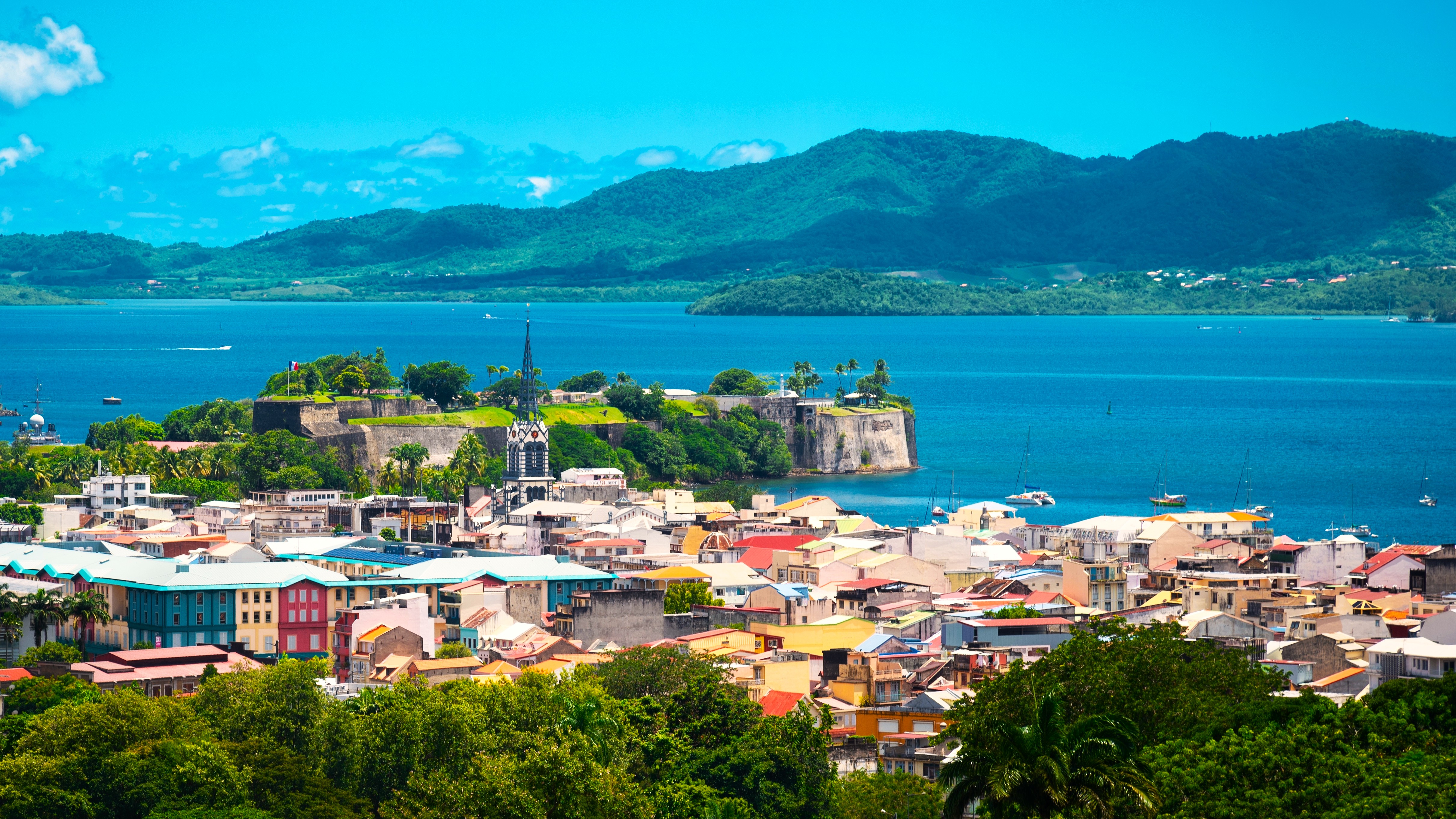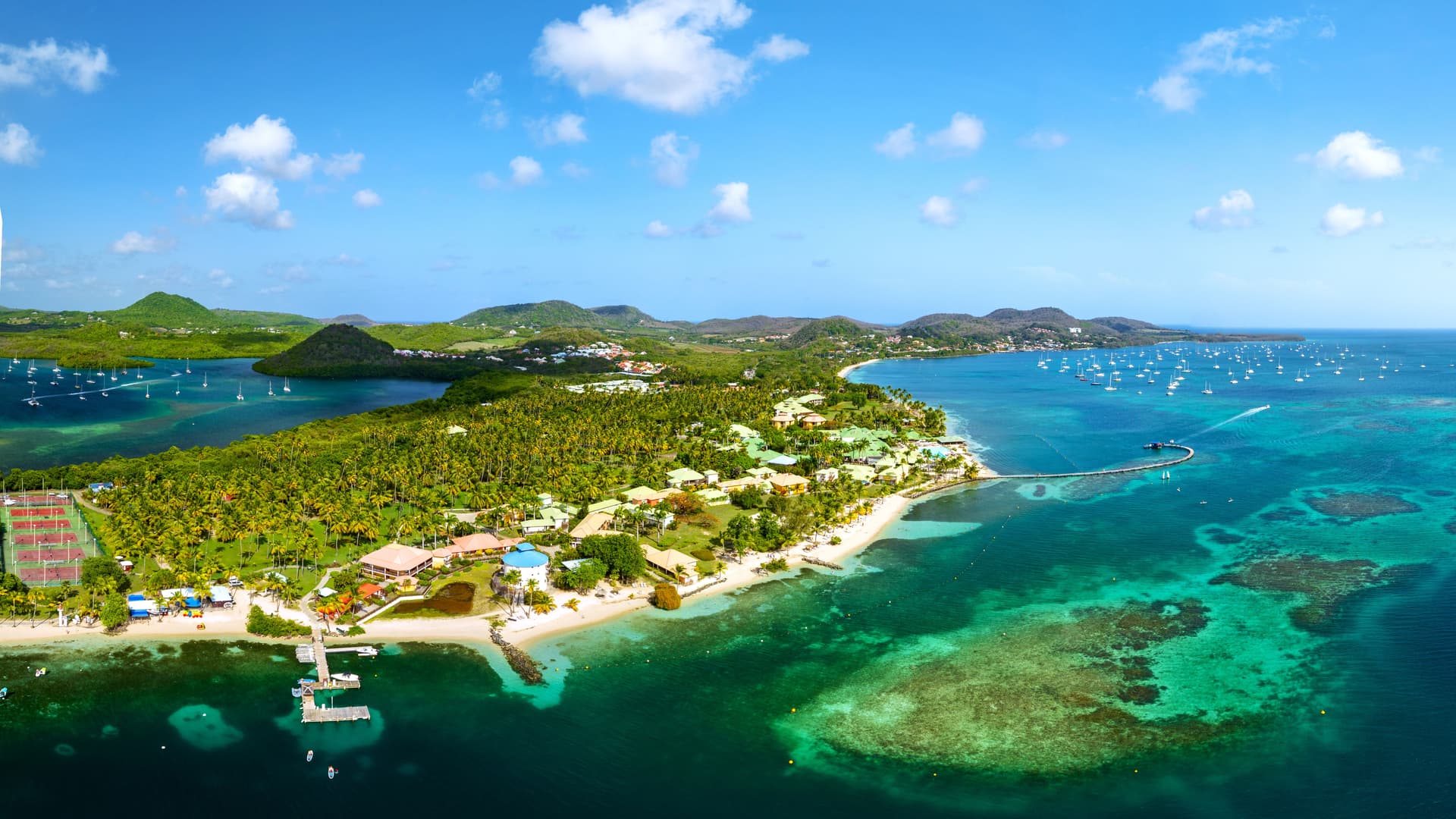
Sunny South Coast
The Caribbean coastline and southern tip, from Anses-d'Arlet to the Salines: white sand beaches, green sea turtles, rum distilleries and straightforward logistics.
The Sunny South Coast encompasses the Caribbean-facing shoreline and southern tip of the island, stretching between Les Anses-d'Arlet and Sainte-Anne. It's Martinique's most visited region, and also the most straightforward for a first visit: short drives, abundant accommodation, accessible beaches, calm Caribbean waters. From our office in Fort-de-France, figure 45 minutes to reach Le Diamant, 1 hour to Sainte-Anne, and 1 hour 15 minutes to Salines beach at the end of the road.
Geographically, the region spans roughly fifty kilometres of coastline, punctuated by low hills (200 to 470 metres for Morne Larcher above Diamant) and weathered volcanic peaks. The climate here is drier than the northern part of the island: Sainte-Anne receives just 1,200 mm of annual rainfall, compared to 4,000 mm on the slopes of Pelée. This relative aridity shows in the vegetation: cereus cacti, locust trees, manchineel trees marked by red paint bands on their trunks, and dry savanna around Pointe Macré.
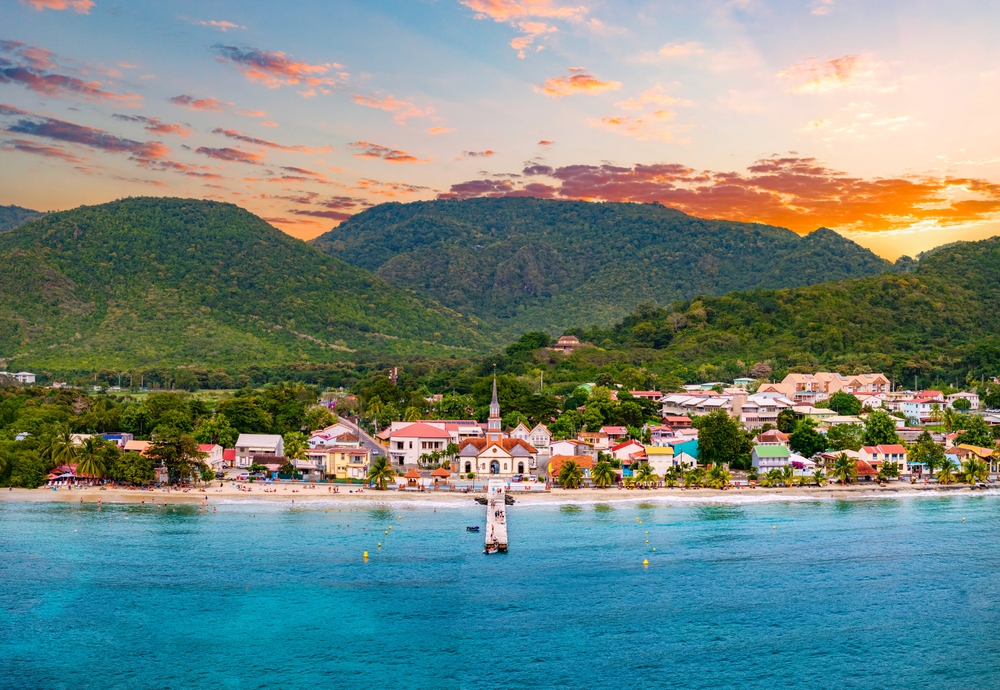
Each village has its own character. Les Anses-d'Arlet lines its colourful Creole houses facing the church, its steeple aligned with the dock creating Martinique's most reproduced image. Petite Anse d'Arlet, a 5-minute drive away, is where green sea turtles graze the seagrass meadows just metres from shore—fins and snorkel are all you need. Le Diamant faces its namesake rock, a 175-metre basaltic islet captured by the British in 1804 and held under the Union Jack for 17 months: today it's a seabird reserve, approached by boat but not visited on foot. Sainte-Luce lives by fishing and rum, home to Trois-Rivières distillery and its nearby counterpart. Sainte-Anne, more touristy, concentrates the club hotels and provides access to windward Cap Chevalier and the sheltered Salines.
Salines beach remains the benchmark: 1 km of white sand bordered by sea-grape and coconut palms, closed to the south by the Savane des Pétrifications, a dry desert where fossilised wood surfaces. Weekends bring Martinican families planting their beach umbrellas by 9am and setting up sound systems—it's local custom, not disruption to avoid, simply a rhythm to expect. Weekdays or before 10am, you'll have the beach nearly to yourself. Slightly east, Anse Trabaud requires a 15-minute walk from the car park, which filters the crowds.
Dining centres on grilled fish at beach shacks (snapper, mahi-mahi, smoked marlin), salt cod accras, Creole blood sausage, and goat curry. At Sainte-Luce, rum punches are sipped at distillery bars after tours. Marin market, Wednesday and Friday mornings, gives a good sense of seasonal fruit: Julie mangoes in May-June, soursops, Cytherian plums, christophines.
You come here for swimming and snorkelling, not serious hiking or the spectacular scenery of the north. It's a home-base region, gentle and logistically straightforward, typically combined with a northern excursion to balance your stay.
To Discover
Swimming with turtles at Petite Anse d'Arlet. From the village dock, fins and snorkel are enough to encounter green sea turtles grazing seagrass meadows 3 to 4 metres down. Best visibility in the morning before 10am, before wind stirs up the sand.
Salines beach and Savane des Pétrifications. 1 km of white sand edged with coconut palms at the end of the D9, extended southward by a desert plateau where fossilised wood surfaces—millions of years old. Allow 1 hour 15 minutes drive from Fort-de-France.
Diamond Rock by boat. A 175-metre basaltic islet facing the village of Diamant, designated an ornithological reserve. Circumnavigate it by semi-rigid from Anse Cafard, landing not included, spotting frigatebirds and brown noddies.
Distilleries at Sainte-Luce and Marin. Trois Rivières and La Mauny offer 45-minute cellar visits with tastings included. It's a chance to understand the difference between AOC Martinique agricultural rum and molasses rum—knowledge most visitors lack upon arrival.
Anse Cafard Memorial. Fifteen white concrete statues facing the sea, honouring enslaved people who perished when the slave ship of 1830 wrecked, its hull later discovered offshore. A sober, little-visited spot, 5 minutes from Diamant.
When to Visit
The dry season, the local Lent, spans February to April: the most stable period, with daytime temperatures of 28°C, sea at 27°C, consistent trade winds, and brief showers. January remains pleasant but windier. May marks transition. June through November is rainy season: frequent tropical downpours in late afternoon, higher humidity, and peak cyclone risk between August and October. Rain usually falls in short bursts and doesn't prevent swimming, though the sea can cloud for a few days after strong winds.
The Sunny South Coast remains the island's driest zone year-round thanks to its low relief that doesn't trap clouds. Even in rainy season, you'll find more sunny windows here than in the north. December through April concentrates peak tourist season: book 4 to 6 months in advance for beachfront accommodation between Christmas and late February.
Practical Advice
Five to seven nights are enough to thoroughly enjoy the Sunny South Coast at a leisurely pace: two or three beaches daily, one boat outing, a distillery, a market visit. Aimé Césaire Airport at Lamentin sits 30 minutes from Sainte-Luce and 40 minutes from Diamant, making it a logical arrival base. A rental car is essential; distances are short but public transport limited.
For a 10 to 14-day stay, we recommend combining this beach base with the North Caribbean (Saint-Pierre, Anses d'Arlet via the coast) or the North Atlantic for hiking and rainforest, which are wetter and more physically demanding. The South Atlantic and its white sandy bottoms (Cap Chevalier, Îlet Chevalier) can be day-tripped from this same base without changing hotels. The region suits families with children, couples seeking simple logistics, and travellers blending beach time with half-day excursions. Hikers and volcanic landscape enthusiasts will find more to explore in the north.