Centre and Fort-de-France
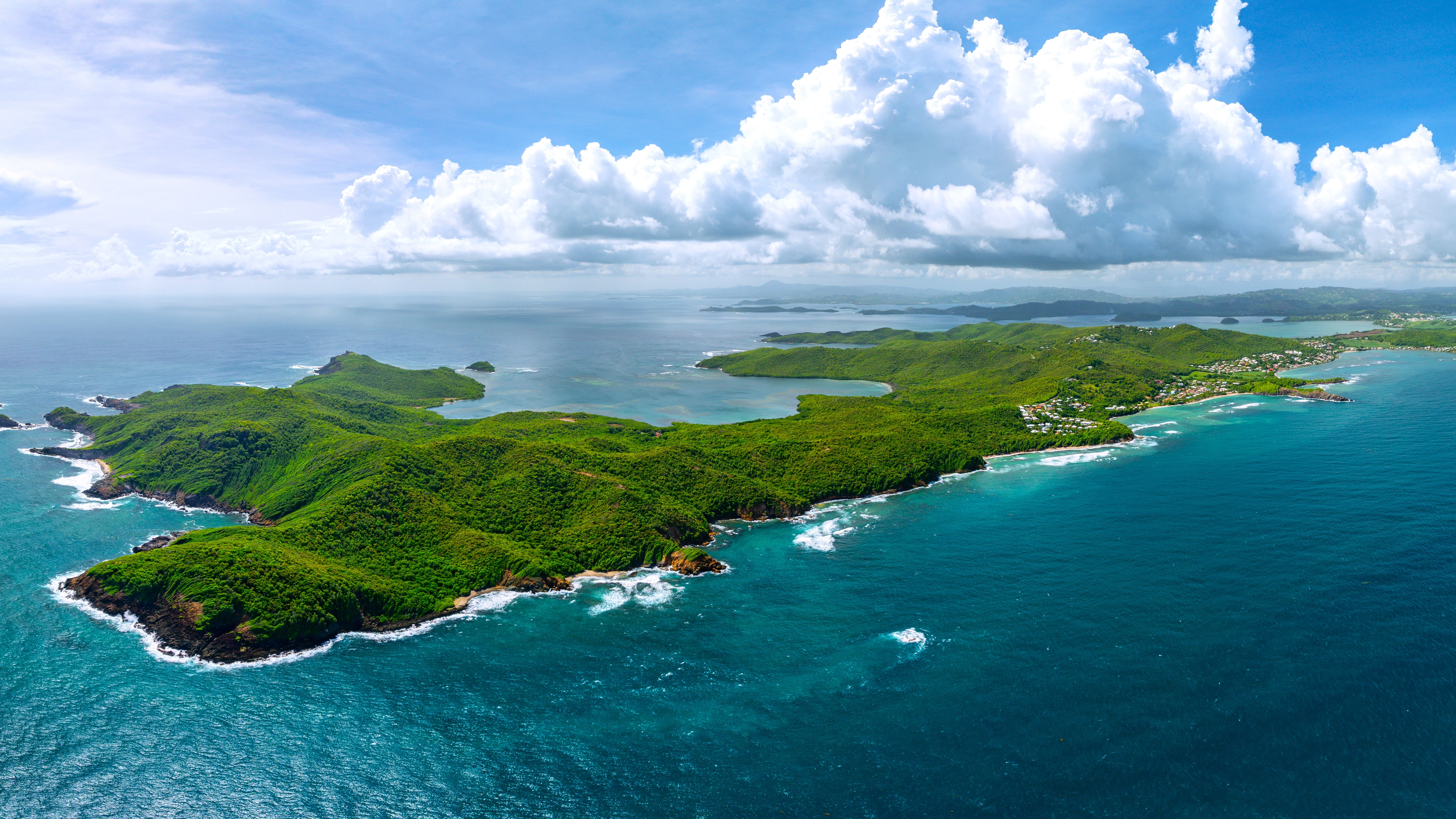
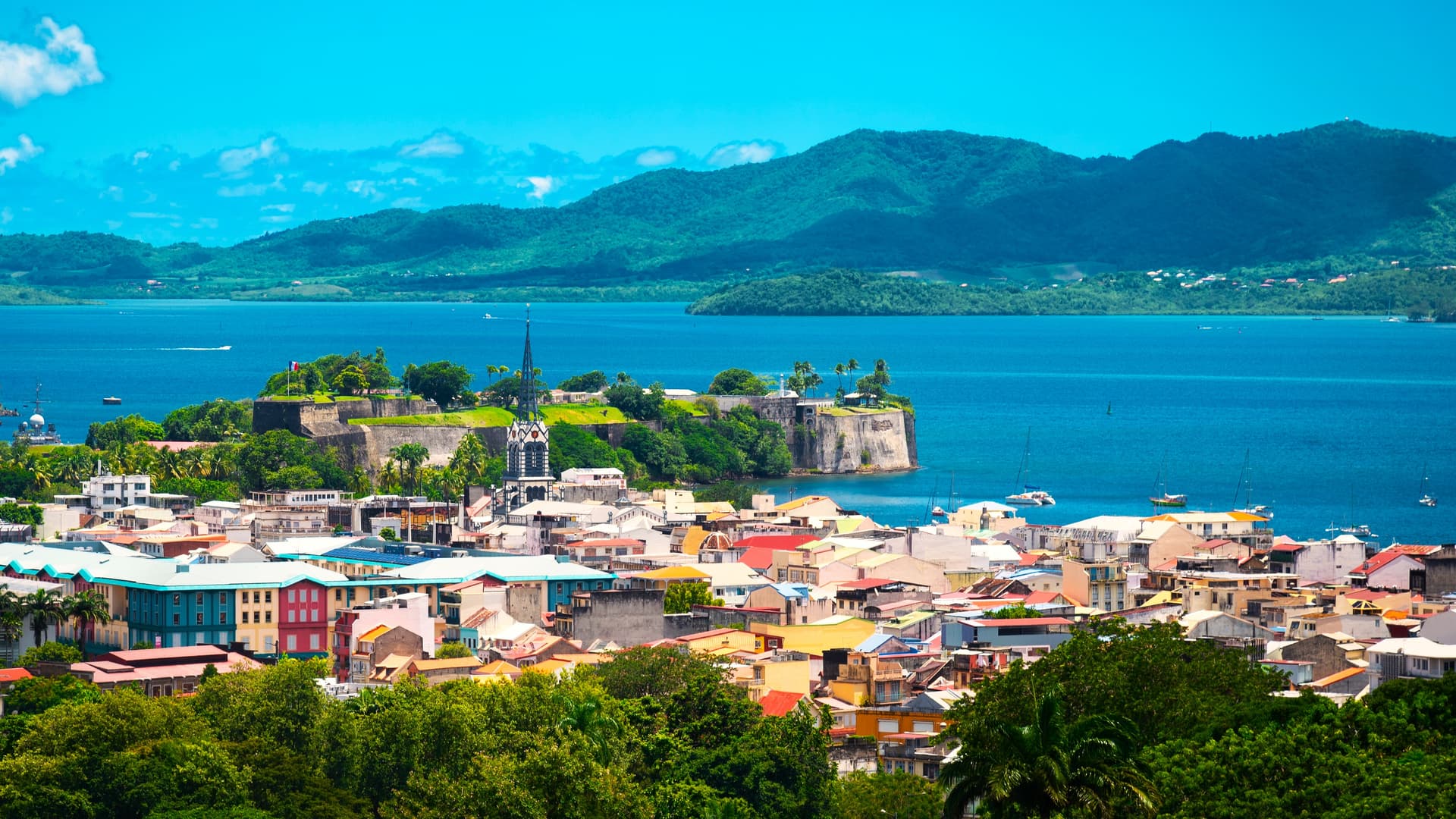
Fort-de-France and its bay, Trois-Îlets facing it, the Carbet peaks at 1196 m behind: central Martinique condenses city, sea and mountain across 20 km.
Fort-de-France concentrates the essence of Martinican life on a narrow strip between the bay and the first slopes of the Carbet peaks. Our agency is based here, and this city is the gateway for almost all the itineraries we craft. The centre spreads across a dozen streets: the Saint-Louis cathedral with its metal framework, the Schœlcher library repatriated from the 1889 Universal Exposition, the great covered market where you buy colombo, bay leaf and flavored rums, and the Saint-Louis fort closing the bay to the south. The Savane square, with its kiosks and flamboyant trees, serves as your landmark for walking around.
The central region actually covers two shores. To the north, Fort-de-France, Schœlcher and Case-Pilote line their neighborhoods along the Caribbean coast, in humid heat that rarely drops below 28°C during the day. South of the bay, Trois-Îlets forms the other hub: an active pottery village since the 17th century, the Pagerie museum housed on the former sugar plantation where Josephine de Beauharnais grew up, the Trois Rivières distillery a little further on, and the ferry terminal connecting Anse Mitan to Fort-de-France in twenty minutes. This crossing avoids the traffic congestion of the ring road during rush hours.
Inland, the landscape rises quickly. The Carbet peaks, five volcanic summits aligned, reach 1196 meters at Piton Lacroix. Trails depart from Fond Saint-Denis or Alma and require a full day for the summits, half a day for intermediate loops. The forest is dense, often shrouded in clouds, with temperatures dropping to 18-20°C at altitude. Further south, Morne Larcher offers a shorter hike, two hours of dry climbing, with views of Diamond Rock.
The cuisine of the centre reflects this double urban and rural anchoring. You eat salt cod fritters and grilled fish on seaside tables in Schœlcher, goat curry in the lolos of the Terres-Sainville neighbourhood, avocado ferocé prepared at the market. The ti-punch is ordered neat, the AOC agricultural rum often coming from the Dillon distillery in the heights of Fort-de-France, or from Trois Rivières in Trois-Îlets. Carnival, between January and Mardi Gras, transforms the city centre for several weekends, with its Red Devils, bradjaks and the ceremony of burned Vaval on Ash Wednesday.
Economically, Fort-de-France remains the administrative capital and main port of the island. This is where most imports are handled and where nearly a third of Martinique's population lives. The city also carries strong literary memory: Aimé Césaire, mayor for fifty-six years, is buried in the Joyau cemetery, and his house in the Redoute neighbourhood can be visited by reservation. This density of history, over a few square kilometres, justifies devoting a full day to it rather than a quick stop between the airport and the southern beaches.
To discover
Covered market and old Fort-de-France. A morning on foot between the spice stalls of the Demarche market, the Saint-Louis cathedral and the Schœlcher library. You understand the city in two hours, provided you arrive before 10am for the cool.
Ferry crossing to Trois-Îlets. Twenty minutes by boat between the Fort-de-France boarding quay and Anse Mitan. The view of the bay on the return, late afternoon, is worth the detour on its own.
Hiking the Carbet peaks. Five to six hours of walking to reach Piton Lacroix from Alma, through humid forest often shrouded in clouds. Slippery trail, bring trekking poles and a windbreaker even in dry season.
Pottery village of Trois-Îlets. Workshop still active since the 17th century, where local clay is fired in wood-burning kilns. The visit pairs well with the Pagerie museum, ten minutes by car away.
Dillon distillery in the heights. One of the few distilleries still operating in Fort-de-France itself, on the slopes of Bois-Quarré. Tasting of AOC agricultural rum and explanation of the process from cane to barrel.
When to go
The best period for the central region runs from December to April, the Martinican dry season. Temperatures range between 26 and 30°C by the sea, showers are brief, humidity remains manageable. It's also carnival season, which occupies the weekends from January to February and climaxes over the five fat days. From June to November the rainy season opens: longer rains, especially in August-September, and real cyclone risk between August and October. Fort-de-France can then receive 250 mm of rain over September alone.
The terrain creates marked variations. At altitude, on the Carbet peaks or nearby Morne Rouge, expect 5 to 7°C cooler than in town and frequent cloud cover in the afternoon, year-round. For highland hikes, set out early, ideally before 7am, to enjoy the view before clouds settle around 11am.
Practical advice
A day and a half suffices for the centre proper: a morning in Fort-de-France on foot, an afternoon in Trois-Îlets via ferry, and a full day if you add a hike in the Carbet peaks. Aimé Césaire airport in Lamentin is 20 minutes by car from the centre outside rush hours, making Fort-de-France a coherent logistics hub to begin or end a stay.
The region combines easily with all the others. The Caribbean North (Saint-Pierre, Anse Couleuvre) is 30 minutes along the coast, the southern beaches (Sainte-Anne, Diamant) 45 minutes away, and the Atlantic North requires crossing the island via the Trace, a forest road that deserves half a day in itself. Comfort is that of an Caribbean capital: decent hotels, varied dining, traffic jams during business hours. The region suits travellers who enjoy combining city, culture and highland hiking, less so those seeking only beach lounging, which is better found in the south.