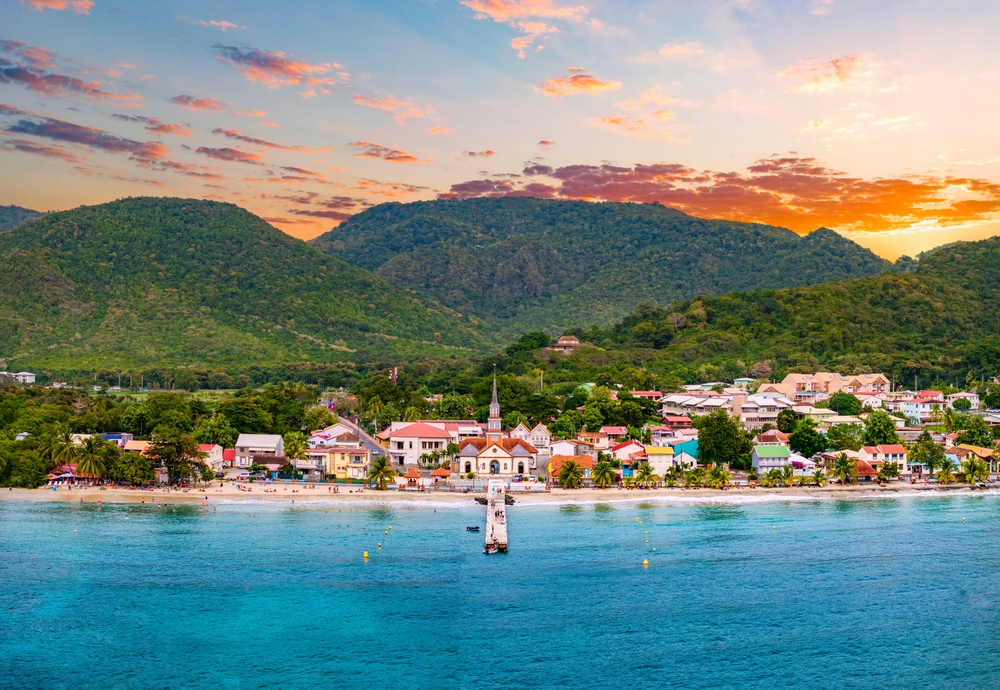
Soufrière
A Creole village in northwestern Martinique, Soufrière is renowned for its sulfurous thermal springs, volcanic shoreline with dark sands, and preserved local character, just steps from Saint-Pierre.
Soufrière is a municipality in southern Martinique, nestled between the Caribbean Sea and the forested foothills of Mount Pelée. Known for its sulfurous hot springs, black sand beaches, and authentic Creole village atmosphere, it draws travelers seeking nature and local culture away from mass tourism circuits.
What to See
The village retains typical Creole architecture: wooden houses with painted galleries, a parish church, and a lively market. The surroundings offer diverse landscapes—tropical forest, banana plantations, fresh-water streams—and several access points to hiking trails in the northern part of the island.
- Thermal springs: warm sulfurous waters renowned for their soothing properties.
- Dark sand beaches: characteristic of northwestern Martinique's volcanic coastline.
- Creole village: traditional architecture, market life, preserved local atmosphere.
- Trail access: gateway to hikes through humid tropical rainforest.
History and Context
Soufrière takes its name from the sulfur present in its volcanic subsoil, a direct legacy of Martinique's geological activity. Like many villages in the island's north, it has been shaped by the sugar and slavery history of the French Antilles. The 1902 catastrophe—the eruption of Mount Pelée that destroyed Saint-Pierre—profoundly reconfigured the demographics and economy of the entire northern region.
Highlights of a Visit
The Sulfurous Thermal Springs
Soufrière's warm waters constitute the village's main attraction. Rich in sulfur, they spring forth naturally and are equipped for bathing. The characteristic sulfur smell signals their presence long before arrival.
The Village and Its Market
Central Soufrière offers an immersion in daily Martinique life. Market stalls display tropical fruits, local spices, and artisanal products. The church and colorful Creole houses warrant a leisurely stroll.
The Volcanic Coastline
The dark sand beaches of this area stand in striking contrast to the white sand beaches of southern Martinique. Less crowded, they offer a wild setting appreciated by nature enthusiasts.
Photography Tips
Morning light is ideal for photographing the village before the day's bustle sets in. The contrasts between dense tropical vegetation and dark sand create striking images. At the thermal springs, steam wisps are captured best early in the morning or late afternoon when light is raking.
Location and Access
Soufrière sits on Martinique's northwestern coast, north of Saint-Pierre. The road hugs the shoreline with views over the Caribbean Sea. By car from Fort-de-France, follow the Caribbean coastal road northward. Public transportation (collective taxis) connects Soufrière to neighboring villages, but a rental car remains the most practical way to explore the region.
Nearby Attractions
- Saint-Pierre — the former colonial capital destroyed by the 1902 eruption, today an open-air museum with its ruins and diving wrecks.
- Mount Pelée — Martinique's emblematic volcano, accessible by hiking from several points in the island's north.
- Grand-Rivière — fishing village at the end of the northern road, known for its authentic atmosphere and spectacular landscapes.
- Le Prêcheur — neighboring coastal village and starting point for hikes to the Falaise Gorges.
Frequently asked questions
The dry season (Lent period), from December to May, offers the best conditions: less rainfall, calmer sea, passable trails. The wet season (hurricane season) from June to November remains possible, but mountain roads can be slippery.
Yes, Soufrière's thermal springs are equipped for bathing. The warm sulfurous waters are accessible to the public. Bring a swimsuit you don't mind staining, as sulfur can affect fabrics.
A rental car is the most practical solution. The Caribbean coastal road (RN2) connects Fort-de-France to Soufrière via Saint-Pierre. Collective taxis also serve the northern villages, but frequencies are limited.
Absolutely. Soufrière naturally combines with Saint-Pierre (ruins and volcanology museum), Le Prêcheur, and for hikers, Mount Pelée trails. A full day suffices to cover this northern Caribbean circuit.
The village has a few snacks and small Creole restaurants serving local cuisine. The offering is modest; for wider choice, neighboring Saint-Pierre has more establishments.
Want to discover this destination?
Our local advisors design your tailor-made trip.